The 2026 market for robotic automation systems is becoming broader, faster, and harder to compare. Buyers now evaluate more than robot speed or payload. They examine integration time, safety functions, software compatibility, energy use, service coverage, and total ownership cost.
The International Federation of Robotics reported 541,302 industrial robot installations worldwide in 2023. Its World Robotics 2024 report also recorded more than 4.28 million robots operating globally. These figures show strong demand, but they do not prove that every system delivers equal value. A fast arm may still underperform when vision calibration is unstable or spare parts take weeks to arrive.
The World Economic Forum’s Future of Jobs Report 2025 identified robotics and automation as major technologies reshaping business through 2030. Deloitte’s smart manufacturing research also indicates that manufacturers increasingly view connected production as a competitiveness priority. The direction is clear. The practical choice is less clear.
This guide examines the best robotic automation systems for global buyers in 2026. It considers articulated robots, collaborative robots, mobile platforms, palletizing cells, welding systems, and vision-guided solutions. Real factory details matter here: cartons arriving unevenly, robots working beside operators, and dusty floors affecting sensors.
There is no perfect shortlist.
A suitable system depends on production volume, workforce skills, facility layout, regulatory requirements, and local support. Some recommendations may also change as software improves and component prices shift. That uncertainty deserves attention. Reliable buyers should compare verified specifications, independent test results, integration records, and lifecycle costs before approving a purchase.
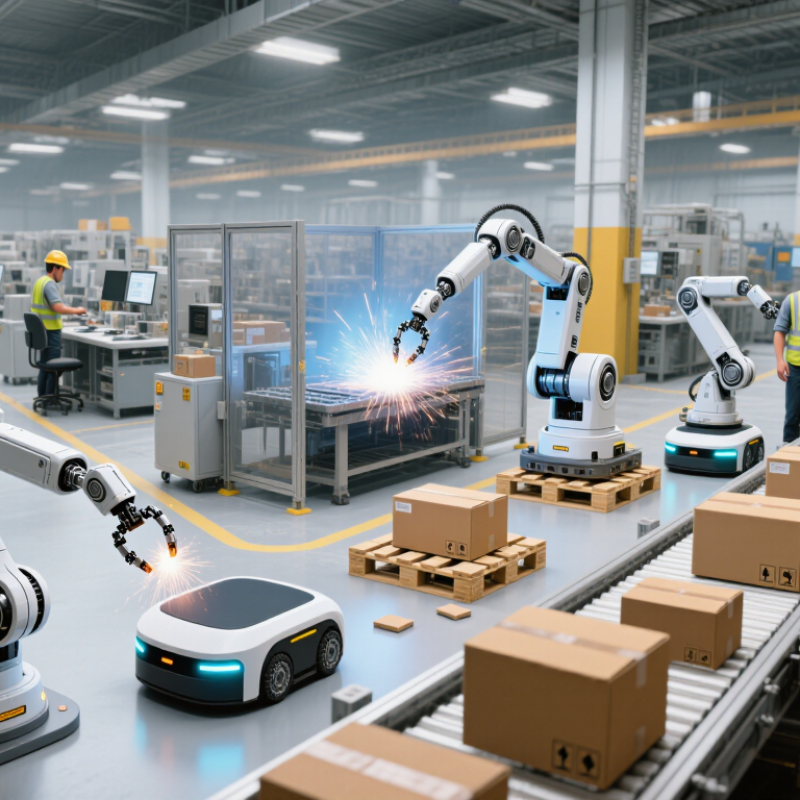
Robotic automation systems combine mechanical arms, mobile units, sensors, controllers, software, and task-specific tools. They repeat physical or digital work with measured accuracy. A system may move cartons, weld frames, inspect surfaces, sort components, or update production records. The robot is only one part. The controller interprets instructions, while sensors report position, force, distance, or barcode data. This feedback helps the system adjust when an object shifts slightly.
In operation, a programmed workflow becomes a sequence of actions. The system identifies a workpiece, selects a tool, performs the task, checks the result, and sends data forward. Safety devices can stop motion when a person enters a restricted area. Reliable integration also requires stable power, clear layouts, maintenance access, and compatible data connections. In real deployments, the hardest step is often not installation. It is defining exceptions. A bent part, poor lighting, or unexpected delay can expose weak planning. Not every process should be automated. That remains an important caution.
Tips: Start with one measurable task. Record cycle time, error rates, operator involvement, and downtime. Global buyers should confirm local safety rules and training requirements. Request testing with actual materials, speeds, and workspace conditions. Leave room for manual recovery. Full autonomy sounds attractive, but it may not suit every site.
In 2026, the best robotic automation systems will be judged by core technologies, not polished demonstrations. Industrial cameras identify edges, surface defects, and changing object positions. Force sensors help robots insert connectors without crushing delicate parts. Motion controllers coordinate joints, conveyors, grippers, and safety zones in milliseconds. These components turn repeatable movement into dependable production work.
Machine learning adds flexibility when products vary slightly. A vision model can locate mixed components on a tray, while adaptive planning selects a safe approach angle. Digital twins allow engineers to test reach, cycle time, and collision risks before installation. This can reduce commissioning hours, though simulation is never reality. Dust, vibration, reflective metal, and poor lighting still expose weak assumptions.
Reliable systems also need industrial networks, clear data logs, and layered safety controls. Real-time communication keeps sensors and actuators synchronized. Diagnostic software can flag rising motor temperatures before an unexpected stoppage. Operators need readable screens, physical access, and practical training. I have found that the hardest issue is often not the robot. It is inconsistent parts, unclear maintenance ownership, or a process that was never measured properly. A careful pilot with one workstation can reveal those gaps early.
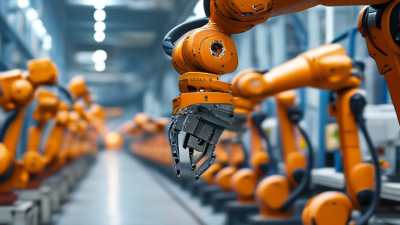
Global buyers entering 2026 should compare robotic automation systems by workflow, not appearance. Fixed articulated robots suit welding, palletizing, and machine tending. SCARA robots handle fast, precise assembly on compact lines. Delta robots perform high-speed picking, especially with lightweight packaged goods.
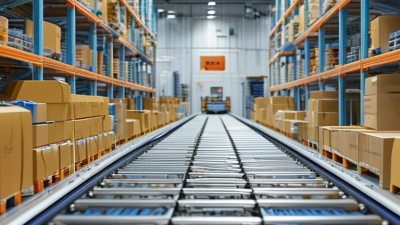
Collaborative robots support shared workspaces and frequent product changes. They usually need less guarding, but risk assessments remain essential. Autonomous mobile robots move bins across warehouses, reducing repetitive transport. Their value depends on floor mapping, battery charging, traffic control, and reliable integration with inventory software. Robotic process automation handles rule-based digital tasks, such as invoice checks and order updates. It cannot repair poor data or unclear procedures.
The International Federation of Robotics reported 541,302 industrial robot installations worldwide in 2023. The same report recorded more than 4.28 million industrial robots operating globally. These figures show mature demand, yet they do not guarantee equal suitability for every factory. IFR’s World Robotics 2024 service-robot data also identified strong professional demand for transport and logistics applications. Definitions vary between reports. Buyers should check whether figures measure units shipped, installed systems, or active fleets.
In field evaluations, cycle time often looks impressive first. Maintenance access matters more later. A vision sensor may miss reflective surfaces, while an AMR may struggle with crowded aisles. Pilot testing should measure uptime, recovery time, training needs, and integration effort. I have found that “fully automated” often describes a sales target, not daily reality. Human supervision still shapes reliable operations.
| System Type | Typical Payload | Typical Reach / Work Envelope | Typical Repeatability | Key Strengths | Common Applications | Main Limitations | Best Fit for Global Buyers |
|---|---|---|---|---|---|---|---|
| Six-Axis Articulated Robot | 3–500 kg | 0.5–3.0 m radius | ±0.02–0.10 mm | Six degrees of freedom; flexible orientation; suitable for complex paths and large work envelopes. | Welding, machine tending, assembly, painting, palletizing, material handling and inspection. | Higher purchase and programming costs; usually requires guarding and a larger safety footprint. | Manufacturers needing one versatile platform for varied production tasks. |
| SCARA Robot | 1–20 kg | 0.3–1.2 m radius | ±0.01–0.05 mm | Fast horizontal movement; high repeatability; compact installation and efficient point-to-point operation. | Small-part assembly, screwdriving, dispensing, packaging, testing and electronics production. | Limited flexibility for complex three-dimensional orientations and difficult approach angles. | High-volume lines requiring rapid, precise assembly in a compact area. |
| Delta Robot | 0.1–6 kg | 0.6–1.6 m diameter; typically 0.2–0.5 m vertical range | ±0.1–0.5 mm | Very high cycle rates; low moving mass; excellent performance for repetitive pick-and-place tasks. | Food handling, pharmaceutical packaging, sorting, vision-guided picking and lightweight product loading. | Limited payload and workspace depth; overhead mounting and accurate product presentation are normally required. | Fast packaging and sorting operations with stable product flow and lightweight loads. |
| Cartesian / Gantry Robot | 5–1,000+ kg | Customized linear axes; several metres are common | ±0.02–0.20 mm | Scalable work envelope; strong vertical lifting capability; straightforward linear motion and maintenance. | Palletizing, CNC loading, 3D printing, dispensing, storage systems and large-format material handling. | Large structural footprint; less flexible for free-form movement; installation can require facility modifications. | Heavy-duty or large-area automation where predictable linear travel is more important than mobility. |
| Collaborative Robot | 3–30 kg | 0.5–1.8 m radius | ±0.02–0.10 mm | Flexible deployment; relatively simple programming; suitable for shared workspaces when risk assessment permits. | Machine tending, light assembly, packaging, screwdriving, quality checks and laboratory handling. | Generally slower than high-speed industrial robots; payload and tooling limits affect productivity. | Small and medium-sized businesses seeking flexible automation with limited floor space or staffing. |
| Mobile Robot / Autonomous Mobile Robot | 50–2,000 kg, depending on platform | Facility-wide navigation; routes can cover hundreds of metres | Positioning commonly within approximately ±10–50 mm | Flexible transport between stations; scalable fleet operation; reduced dependence on fixed conveyors. | Parts delivery, warehouse transport, line replenishment, waste collection and order movement. | Requires suitable floor conditions, traffic management, charging strategy and digital fleet coordination. | Facilities with changing layouts, multiple workstations or a strong need for flexible internal logistics. |
| Mobile Manipulator | 5–30 kg arm payload, plus mobile base capacity | Mobile navigation with approximately 0.5–1.5 m arm reach | Typically ±0.05–0.20 mm at the arm, subject to base localization | Combines autonomous movement with robotic picking or handling; can serve several stations. | Flexible inspection, laboratory automation, kitting, machine tending and low-volume material handling. | More complex perception, navigation and integration; performance depends on floor conditions and environmental variability. | Operations requiring both workstation access and transport flexibility without permanent robot cells. |
For global buyers, robotic automation should be judged on verified performance, not impressive demonstrations. The International Federation of Robotics reported 541,302 industrial robots installed worldwide in 2023, showing strong demand and rising operational complexity.
Ask suppliers for measured cycle time, repeatability, uptime, and recovery time under real production conditions.
A robot that performs perfectly for one hour may struggle after eight hours, especially with dust, heat, or changing materials.
Safety must be tested at the cell level. Review risk assessments, guarding, emergency stops, safe-speed functions, and operator access points against ISO 10218 and ISO/TS 15066 requirements.
Watch a live reset procedure. Can a trained operator restore production without entering an unsafe zone? Document every assumption. Small gaps often appear between design drawings and the factory floor.
Integration deserves equal attention. Check communication protocols, data ownership, vision compatibility, tooling changes, and maintenance access before signing a contract.
Request a digital simulation and a factory acceptance test using representative parts.
Track actual availability for several weeks, not only promised output.
The IFR’s World Robotics data confirms market growth, but it does not guarantee business fit. That judgment remains yours.
In practice, my evaluation checklist still misses edge cases. Humility is useful here. A slower system with stable integration may outperform a faster system that needs constant intervention.
Global robotic automation purchases in 2026 will depend less on headline prices and more on operating fit. The International Federation of Robotics reported 541,302 industrial robots installed worldwide in 2023. The global operational stock exceeded 4.28 million units. This scale shows strong demand, but it also increases supplier differences in integration quality, service response, and software compatibility.
Purchase budgets should include the robot, tooling, vision systems, safety equipment, installation, training, spare parts, and production downtime. Freight, customs duties, local certification, and currency changes also affect the final cost. Deloitte’s 2024 Global Smart Manufacturing Survey found that 86% of manufacturing executives view smart manufacturing as a major competitiveness driver. Yet, many projects still underestimate integration labor. That mistake is expensive.
Request a five-year total-cost model from every supplier. Compare cycle time, uptime targets, maintenance intervals, energy use, and programming requirements. Ask for documented acceptance tests and realistic references from similar production environments. A factory handling dusty parts needs different protection than a clean packaging line. Remote support sounds useful, but response-time commitments should be written into the contract. I would not trust a low quotation without a clear exclusions list. The cheapest offer can become the slowest installation. Supplier audits should examine engineering capacity, technician coverage, cybersecurity controls, and spare-part availability. These checks are less impressive than a showroom demonstration, but they expose practical weaknesses.