Important Notice: Amprod Acquires Simmtech

Industry InSights

What Is the Best China L7e Quadricycle for Global Buyers?

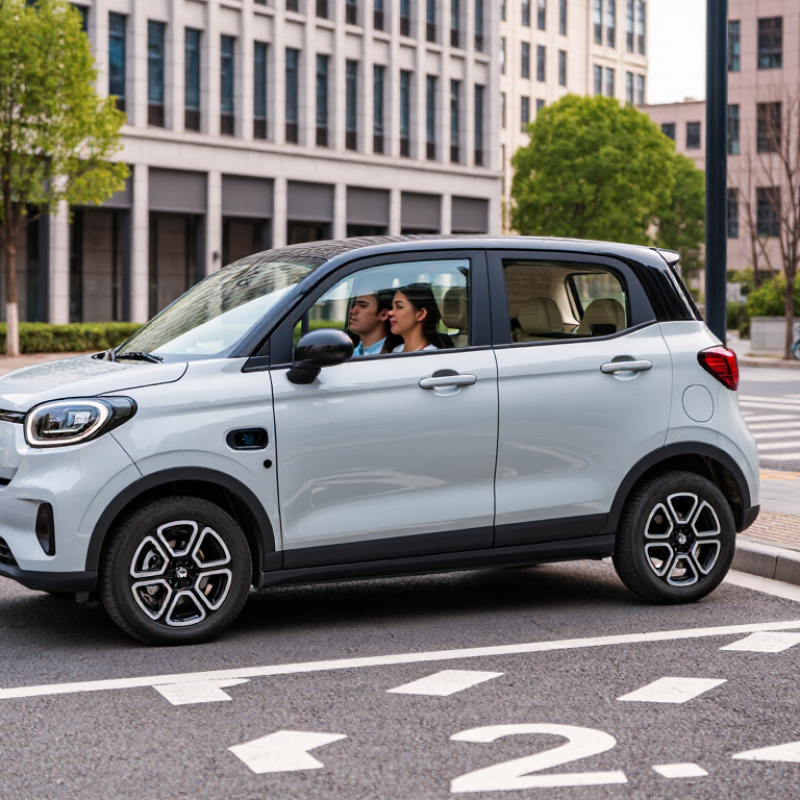
Choosing the best L7e Quadricycle for global buyers requires more than comparing price, battery size, or glossy photographs. Buyers need a vehicle that fits real streets, local regulations, charging habits, and daily weather conditions. A compact quadricycle may look ideal in a showroom, yet feel narrow on rough roads or impractical during winter use. Fit matters.

This guide examines the details that experienced buyers and fleet operators usually check first. These include certified vehicle classification, occupant protection, braking performance, battery warranty, charging compatibility, and available service support. Dimensions also matter. A vehicle that fits neatly into a 2.4-meter parking space can simplify urban ownership. However, measurements alone cannot prove practical comfort or reliability.

Manufacturer documentation should be checked carefully, including test reports, conformity records, user manuals, and spare-parts policies. Local approval requirements can differ, even when a model is marketed internationally. That is the catch. A vehicle suitable for one market may require different equipment or registration steps elsewhere. Buyers should confirm these points with qualified local authorities and authorized distributors.

Real-world evaluation is equally important. Drive the quadricycle over slopes, uneven pavement, and crowded streets when possible. Listen for cabin noise. Check visibility and storage access. Ask how quickly replacement parts can arrive. Some advertised ranges also seem optimistic under heavy loads, cold temperatures, or frequent acceleration. This guide therefore compares practical evidence, not marketing claims alone. The ideal L7e Quadricycle balances safety, efficiency, serviceability, comfort, and transparent support for its intended market.

What Is the Best China L7e Quadricycle for Global Buyers?

What Is an L7e Quadricycle and Why Does It Matter?

What Is an L7e Quadricycle and Why Does It Matter?

An L7e quadricycle is a light, four-wheeled vehicle category defined by European Union Regulation 168/2013. It generally allows a maximum design speed above 45 km/h and engine power up to 15 kW. Weight limits differ by use: passenger models typically stay below 450 kg, excluding batteries, while goods models can reach 600 kg. These limits shape the frame, battery size, braking system, and practical range.

That distinction matters.

For global buyers assessing a China-made L7e quadricycle, the category is not simply a product label. A vehicle designed for L7e must still meet the destination market’s approval, lighting, braking, safety, and charging requirements. European conformity documents should be checked against the actual vehicle identification number, not only a brochure. The European Commission’s vehicle type-approval framework supports this verification process.

Market timing is also relevant. The International Energy Agency reported nearly 14 million electric car sales worldwide in 2023, with Europe, China, and the United States representing about 95% of sales. However, that figure covers passenger cars, not L7e vehicles. Buyers should avoid treating broad EV growth as proof of quadricycle demand. It is an imperfect comparison.

In practice, inspect battery certification, cold-weather performance, payload, turning radius, and service access. Ask for measured range, not optimistic range. Small vehicles can be efficient, yet limited cabin space and charging compatibility may become daily frustrations.

Which Features Define a High-Quality China-Made L7e Quadricycle?

What Is the Best China L7e Quadricycle for Global Buyers?

Which Features Define a High-Quality China-Made L7e Quadricycle?

A high-quality L7e quadricycle starts with accurate classification. Under European Regulation (EU) No 168/2013, passenger models generally remain within 450 kilograms and 15 kW. Cargo versions can reach 600 kilograms. Buyers should verify these limits using homologation documents, not sales brochures. Battery traceability, documented cell testing, and a stable battery-management system also matter. The IEA reported more than 14 million electric car sales globally in 2023, but compact quadricycles require different testing priorities.

Check the details.

Inspect braking distance, steering response, weld consistency, door alignment, and underbody protection. A practical quality audit should include repeated charging, hill starts, cold-weather operation, and water-ingress checks. The charging system should follow recognised IEC requirements, while battery transport documents should align with UN 38.3 testing. The European Commission’s road-safety framework also supports stronger attention to occupant restraint, lighting, visibility, and structural integrity. A large touchscreen is not evidence of quality. It can distract from poor thermal control or limited spare parts.

Tips:

Request a third-party inspection before shipment. Ask for battery test records, parts lists, warranty procedures, and software-update policies. Verify whether local technicians can diagnose the vehicle. ACEA’s Vehicles on European Roads report places the average European car age above twelve years, reminding buyers that long-term repairability matters. Even excellent factory data has limits. Real roads, heavy rain, and imperfect maintenance may expose weaknesses that laboratory testing misses.

How Do Chinese L7e Quadricycles Compare Across Key Buying Factors?

Choosing the best Chinese L7e quadricycle depends on practical details, not attractive photographs. Buyers should compare rated speed, passenger capacity, payload, battery chemistry, and usable range. A claimed range may fall sharply in winter, heavy rain, or stop-and-go traffic. That matters.

In real evaluations, compact dimensions are a clear advantage. These vehicles can fit narrow streets and small parking spaces. However, cabin width differs noticeably between models. Two adults may sit comfortably in one vehicle but feel cramped in another. Check seat adjustment, door opening angles, visibility, and storage space in person. Braking performance, lighting, seat belts, tire quality, and body protection also deserve careful inspection. Safety equipment varies, and a low purchase price should not excuse weak build quality.

Charging support is another major buying factor. A household socket may be convenient, but charging times can be long. Faster charging requires compatible equipment and reliable electrical access. Battery warranty terms, replacement pricing, and service response should be written clearly. Ask who handles repairs, where spare parts are stored, and how diagnostic support works after delivery. Import procedures and local vehicle requirements must be confirmed independently, because rules differ by market. Some sellers provide excellent documentation; others leave important details unclear. That uncertainty is a warning sign. Buyers should compare total ownership cost, including insurance, maintenance, transport, and battery aging. The cheapest vehicle may not remain cheapest for long.

What Is the Best China L7e Quadricycle for Global Buyers?

This comparison uses three representative L7e buyer profiles rather than company or brand data. Extended-range urban models generally offer the strongest balance for daily commuting, while compact models prioritize affordability and light-cargo versions provide greater practical utility. Actual specifications, certification, battery performance, and pricing should be verified for the destination market.

Indicative market-reference figures for China-to-global L7e procurement; values vary by configuration, battery option, and local homologation requirements.

What Legal, Safety, and Import Requirements Should Global Buyers Check?

For global buyers, a China-made L7e quadricycle must meet the destination market’s exact category rules. Under EU Regulation 168/2013, an L7e passenger quadricycle generally has a maximum continuous power of 15 kW and a design speed of up to 90 km/h. Its mass limit is usually 450 kg, excluding batteries. Classification is not automatic. Local authorities may request type approval, a Certificate of Conformity, VIN records, lighting approval, electromagnetic compatibility tests, and left- or right-hand traffic compliance. Customs codes and import duties also vary by country.

Safety deserves closer attention. UNECE Regulation No. 100 covers rechargeable electric powertrains, while Regulation No. 10 addresses electromagnetic compatibility. Buyers should also request UN 38.3 transport test evidence for lithium batteries, clear charging instructions, emergency isolation procedures, and traceable battery records. Euro NCAP’s 2014 quadricycle tests produced mainly one- and two-star ratings, showing that a low-speed vehicle may provide limited crash protection. A seat belt is not enough. Check door strength, rollover structure, glazing, braking, tyres, and pedestrian visibility. The IEA Global EV Outlook 2024 reported more than 17 million electric car sales worldwide in 2024, but L7e vehicles remain a separate regulatory class. This distinction is easy to miss.

Import inspections can expose small inconsistencies. A translated manual may not match the charger label. Range figures can also change sharply in cold weather, with two passengers, or on steep roads. Buyers should use an independent conformity engineer, verify production documents, and confirm registration eligibility before paying the balance. A factory certificate alone may be insufficient.

How Can Buyers Select the Best China L7e Quadricycle for Their Market?

Selecting the best China L7e quadricycle starts with the buyer’s market, not the showroom photograph. Road width, climate, parking space, and daily travel distance all matter. A compact vehicle may suit dense European streets, yet struggle on steep roads or rough surfaces.

Check the local L7e approval pathway before discussing price. Ask for complete technical files, test reports, identification details, and conformity documents. Requirements can differ between countries, even within the same region. Confirm the permitted speed, vehicle mass, payload, dimensions, lighting, braking system, and safety equipment. Do not rely on a translated brochure alone.

Battery performance needs practical evidence. Request range data under realistic temperatures, passenger loads, and stop-and-go traffic. A vehicle advertised for long range may deliver less during winter or with frequent hills. Ask about battery warranty, charging time, thermal management, and replacement cost. Inspect the charging connector and confirm local compatibility.

After-sales support often decides whether a purchase succeeds. Buyers should review spare-parts availability, technician training, diagnostic access, and response times. A low purchase price can become expensive when one controller takes weeks to arrive. I would also test door seals, suspension noise, seat comfort, and visibility in person. Small details matter every day.

No model fits every market perfectly. A careful pilot order may reveal weaknesses that specifications hide. That extra caution is sometimes inconvenient, but it protects the final investment.

What Is the Best China L7e Quadricycle for Global Buyers? - How Can Buyers Select the Best China L7e Quadricycle for Their Market?

Buyer Selection Matrix for China-Manufactured L7e Quadricycles
Selection Dimension Relevant L7e Benchmark or Typical Export Range Why It Matters to Global Buyers Best-Fit Market or Application Buyer Verification Point
Vehicle classification L7e heavy quadricycle; maximum design speed generally up to 90 km/h; maximum continuous rated power up to 15 kW under the EU category framework. Classification affects type approval, driving-licence rules, road access, insurance, and safety requirements. Urban mobility, short-distance commuting, municipal fleets, and compact commercial transport. Confirm the category in the target market and ensure the homologation documents match the declared vehicle class.
Seating capacity Usually 2 seats for passenger models; some commercial derivatives use a single driver seat with an enclosed cargo area. Passenger capacity directly influences fleet productivity, insurance classification, and interior packaging. Two-seat versions: commuting and car-sharing. Cargo versions: delivery, service, and campus operations. Check approved seating positions, seat-belt requirements, payload after passenger loading, and child-restraint provisions where applicable.
Powertrain Battery-electric configurations commonly use approximately 5–15 kW peak or rated motor output, depending on the specification and local approval basis. Motor output affects hill climbing, acceleration, thermal performance, and legal classification. Lower-power versions suit flat urban areas; higher-output versions are better for gradients, heavier loads, and mixed traffic. Request continuous power, peak power, torque curve, gradeability test results, and controller specifications rather than peak power alone.
Battery chemistry Lithium iron phosphate (LFP) is common for safety and cycle life; other lithium-ion chemistries may be offered for lower mass or higher energy density. Chemistry affects usable range, cold-weather performance, service life, charging safety, and transport classification. LFP: fleet use, hot climates, and frequent charging. Higher-energy-density packs: longer-range passenger use. Verify cell type, battery-management system functions, warranty capacity threshold, thermal protection, and UN 38.3 transport test documentation.
Battery capacity and usable range Typical battery capacities are approximately 10–30 kWh, with claimed urban ranges often around 100–250 km under specified test conditions. Advertised range can differ substantially from real-world range because of temperature, speed, payload, road gradient, and heating use. 10–15 kWh: short urban trips. 20–30 kWh: longer daily routes or commercial duty cycles. Compare tested usable energy and range under a recognized cycle; calculate range at the buyer’s average speed, payload, and climate.
Charging system AC charging is common; onboard chargers may be approximately 2.2–6.6 kW. DC fast charging is configuration-dependent and not universal. Charging compatibility determines fleet uptime and whether the vehicle can use existing residential, workplace, or public infrastructure. AC-only: home, depot, and overnight charging. DC-capable versions: high-utilization fleets and rapid turnaround. Confirm connector type, voltage, phase, maximum current, charging time, residual-current protection, and compatibility with local grid standards.
Vehicle dimensions Many compact L7e models are approximately 2.5–3.7 m long and 1.3–1.6 m wide, although cargo bodies may vary. External dimensions determine parking access, lane usability, transport cost, and suitability for narrow urban streets. Highly compact versions: dense cities and tourism zones. Longer bodies: cargo capacity and improved cabin space. Measure mirrors, doors, turning circle, loading height, and container compatibility—not only the body dimensions in the brochure.
Kerb mass and payload Passenger L7e vehicles must remain within the applicable mass limit; electric-vehicle battery treatment and national approval rules must be checked carefully. Typical payloads vary widely by body design. A larger battery or heavier body can reduce available payload and may change the applicable approval category. Light passenger use: compact battery and low mass. Delivery use: prioritize certified payload over maximum battery size. Obtain certified mass in running order, axle loads, gross vehicle mass, and payload with the selected battery and optional equipment installed.
Safety equipment Depending on the approval market, equipment may include seat belts, lighting, mirrors, windscreen systems, parking brakes, doors, occupant restraints, and relevant crash or structural provisions. Safety equipment and test scope vary by jurisdiction and should not be inferred from appearance or passenger-car comparisons. Passenger fleets and markets with strict roadworthiness inspections should select the highest documented safety specification. Review the complete type-approval file, test reports, lighting approvals, restraint specifications, and market-specific mandatory equipment.
Climate suitability Battery performance, cabin heating, air conditioning, sealing, corrosion protection, and charging behavior can vary considerably between standard configurations. Extreme heat can increase cooling demand, while cold temperatures can reduce available range and charging performance. Tropical markets: corrosion protection and cooling. Cold markets: battery heating, cabin heating, and low-temperature charging controls. Request hot- and cold-weather test data, operating temperature limits, HVAC energy consumption, and battery thermal-management details.
After-sales support Support quality depends on spare-parts availability, diagnostic access, repair manuals, technician training, remote assistance, and warranty administration. A lower purchase price can be offset by long downtime, unavailable components, or limited technical support. All markets; especially important for fleet operators, island markets, and regions without established electric-vehicle service networks. Agree on parts lead times, warranty exclusions, diagnostic tools, software access, service training, and local stock requirements before purchase.
Regulatory and import documentation Potential documents include certificate of conformity, type-approval evidence, VIN records, battery transport documents, customs paperwork, and market-specific declarations. Missing or inconsistent documentation can prevent registration, delay customs clearance, or create liability for the importer. Essential for Europe and other markets with formal vehicle registration and type-approval systems. Have an independent homologation specialist confirm eligibility before signing a purchase contract or placing a production order.
Total cost of ownership Evaluate purchase price, freight, duties, registration, electricity, insurance, maintenance, battery warranty, tires, downtime, and residual value. The least expensive vehicle upfront may not deliver the lowest cost per kilometre or lowest fleet operating cost. Fleet and delivery operators should prioritize uptime, energy efficiency, serviceability, and predictable parts pricing. Build a three- to five-year cost model using local electricity prices, annual mileage, charging losses, labor, and expected battery replacement policy.
Data note: Technical ranges are indicative specifications commonly seen in compact electric L7e export configurations. Legal limits, approval procedures, charging standards, and registration requirements vary by destination market and must be confirmed with the relevant authority before importation.