What Is a Check Valve and How Does It Work?
A Check Valve looks simple from the outside: a small disc, plate, or ball moves as fluid passes through a pipe. Yet that movement can protect pumps, limit backflow, and help keep a system operating as intended. The basic principle is straightforward. Forward flow opens the valve; reverse flow helps close it. In practice, the result depends on details such as valve orientation, fluid speed, pressure, and the selected design.
Philip L. Skousen, author of Valve Handbook, is a recognized reference in valve engineering. To avoid presenting an unverified sentence as his exact words, here is a paraphrase of the core operating principle: “A check valve opens to forward flow and closes when flow reverses.” The idea is easy to picture: water pushes a hinged disc aside, then reverse pressure brings it back toward its seat. Some models use springs; others rely mainly on gravity and flow. Small differences matter. A valve that closes too slowly may allow a brief reverse surge, while one that closes abruptly can contribute to water hammer. Real systems are less tidy than diagrams suggest. Debris, wear, and installation choices can change how a valve behaves. Understanding those limits makes it easier to compare swing, lift, and spring-loaded designs—and to ask better questions before choosing a Check Valve.
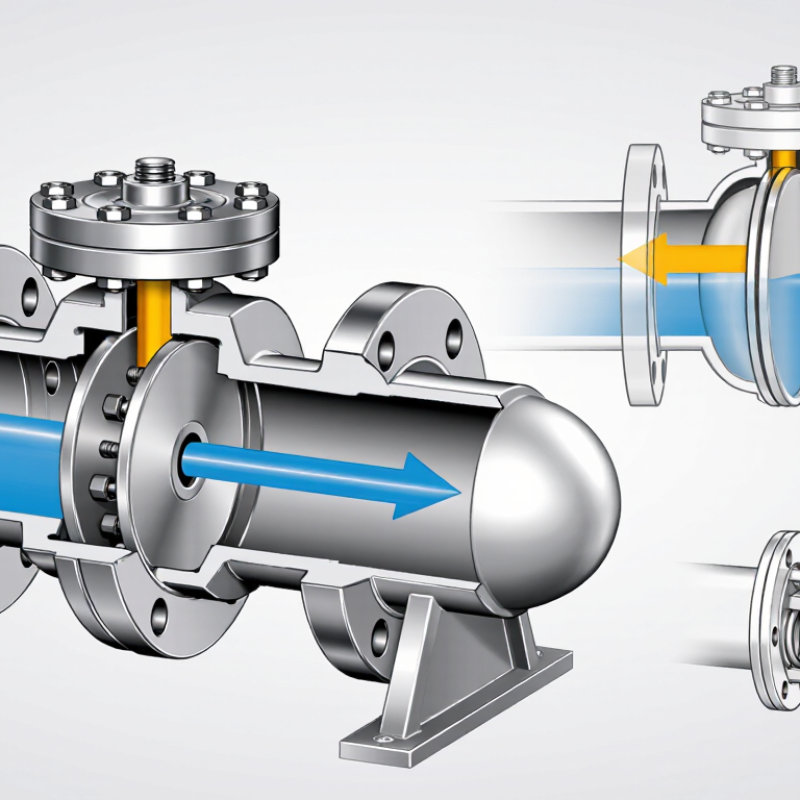
What a Check Valve Is and Its Role in a Fluid System
A check valve is a one-way device that allows fluid to move in the intended direction and restricts reverse flow. It usually works automatically, using a disc, ball, flap, or spring-loaded element that responds to pressure. No handle is needed. When upstream pressure pushes fluid forward, the valve opens; when flow slows or reverses, the closing element returns to its seat.
In a fluid system, this helps protect pumps from reverse rotation and can keep a suction line primed between operating cycles. For example, a pump discharge line may use a check valve to limit water draining back through the pump after shutdown. The valve also helps prevent unwanted mixing between connected lines. It is not perfect. A valve that closes too quickly can contribute to pressure surges, so system behavior matters as much as the valve itself.
Selection and installation affect how reliably it performs. The valve must suit the fluid, operating pressure, flow rate, and pipe orientation. An arrow on the body typically marks the permitted flow direction. A valve that is too small can restrict flow, while debris or wear can prevent a tight seal. In practice, the best choice is not always obvious from pipe size alone; pressure losses, maintenance access, and the consequences of leakage deserve a closer look.
The Main Parts That Control One-Way Flow
A check valve allows fluid to move forward and blocks reverse flow. Its body guides the stream, while the seat forms the sealing surface. Inside, a disc, ball, or hinged flap responds to pressure: forward pressure lifts it from the seat; reverse pressure pushes it closed. Simple in principle. Small details matter.
A spring-loaded disc adds closing force and can help limit the brief reverse flow that occurs before closure. A swing check uses a hinged disc instead, which opens with the flow and drops toward its seat when flow weakens. The spring, hinge, disc, and seat must suit the fluid, pressure, orientation, and expected flow rate. A mismatched valve may chatter, wear unevenly, or create needless pressure loss. That detail is easy to miss.
The U.S. Department of Energy’s Improving Pumping System Performance sourcebook identifies potential energy savings of 20–50% through pumping-system improvements. This is a system-wide estimate, not a promise that changing one check valve will achieve those savings. Still, valve selection belongs in the review: an undersized opening can restrict flow, while poor closure can allow backflow. On site, listen for repeated tapping and check for vibration; neither symptom alone proves the valve is faulty. A pressure reading across the valve can help confirm the diagnosis.
How Pressure Opens and Closes the Valve
A check valve opens when fluid pressure on its inlet side pushes the internal disc, ball, or poppet away from its seat. The pressure must exceed the valve’s cracking pressure, which is the minimum force needed to start flow. That is the opening threshold. Once the valve opens, moving fluid holds the closure element away from the seat. A spring may resist that movement, while gravity can matter in some designs and installation positions. Small difference, big effect. Even a modest change in pressure can affect how freely a valve opens.
When inlet pressure falls, or pressure on the outlet side becomes greater, the moving element returns toward the seat. A spring can help it close; reverse pressure usually presses it more firmly into place. This blocks or limits backflow, though no valve should be assumed perfectly leakproof without checking its specifications. In practice, a rapid pressure change can make the disc chatter, creating noise and extra wear. I find it useful to picture a small metal door responding to pressure, but the image misses an important detail: seat condition, fluid properties, and correct orientation all influence performance. A valve that works well in one pipe may behave differently in another.
What Is a Check Valve and How Does It Work?
How pressure opens and closes the valve
A check valve opens when upstream pressure exceeds downstream pressure by more than the valve’s cracking pressure. As the pressure difference falls below that threshold, the valve closes; reverse pressure helps keep it seated. Values shown are illustrative—actual cracking pressure varies by valve design.
Common Check Valve Designs and Their Differences
Check valves look simple, but their internal motion changes pressure loss, installation limits, and closing behavior. A swing check uses a hinged disc that opens with forward flow. Its passage is relatively unobstructed, but slow closure can allow reverse flow and water hammer.
A lift or piston check moves vertically onto a seat. It suits compact, higher-pressure lines, though its tighter flow path can create more resistance. Spring-assisted versions may close faster; the spring also adds resistance.
A dual-plate check folds two small discs toward the pipe wall. It is compact and lightweight, making it practical where installation space is tight. A ball check instead lifts a ball from its seat, often handling wastewater or fluids with suspended solids. It may need enough flow to lift the ball fully.
Small parts matter. Selection should consider fluid cleanliness, flow rate, mounting position, and expected pressure drop—not just pipe size.
The U.S. Department of Energy’s Improving Pumping System Performance sourcebook reports that pumping systems can account for 25–50% of energy use in some industrial operations.
That figure covers entire pumping systems, not check valves alone, but it underlines why avoidable resistance deserves attention. A tidy schematic still cannot replace checking the actual operating conditions.
Where Check Valves Are Used and How to Choose One
A check valve allows fluid to move in one direction and closes when flow reverses. Many designs use a swinging disc, a lifting disc, or a spring-loaded poppet. Reverse flow pushes the closing element against its seat. The action is automatic. Check valves are common near pump outlets, in water distribution lines, and in compressed-air systems. They can help prevent backflow, but they do not eliminate every pressure surge.
Choose a valve for the actual fluid, operating pressure, temperature, and flow rate. A swing check valve often suits steady flow in a larger line, while a spring-loaded design may fit a compact installation. Check the cracking pressure: a spring that is too strong can restrict flow. Match the connection size and confirm the permitted mounting position. Dirty water or particles can keep the valve from sealing, so service access matters. It is easy to overlook that detail.
Tips: Compare the valve’s pressure rating with the system’s operating range, not just its pipe size. If flow is pulsing or water hammer is a concern, ask a qualified technician to assess the layout; a check valve alone may not solve it. Read the manufacturer’s installation instructions before fitting.