How to Choose Depth Filtration Products for Sourcing?
Choosing depth filtration products for sourcing is not a simple catalog exercise. The right product must match the fluid, process stage, production scale, and quality target. A filter that performs well with clarified water may behave differently with viscous extracts, protein solutions, or fermentation broths. Small differences matter.
Dr. David B. Pall, a recognized filtration pioneer, stated, “The filter must be selected for the process, not merely for the fluid.” This principle remains highly practical. Buyers should examine media type, nominal or absolute retention, flow rate, pressure tolerance, extractables, and compatibility with cleaning procedures. Supplier documentation also deserves close attention. Check test methods, lot consistency, certificates, and technical support before approving samples.
Physical testing should follow. Compare turbidity, throughput, pressure rise, and product recovery under realistic conditions. A clean laboratory liquid may hide problems. Real production fluids can contain suspended solids, changing viscosity, and unexpected interactions with the filter media. That is where many sourcing decisions become uncomfortable.
Do not select by price alone.
A cheaper cartridge may require more frequent replacement, create higher labor costs, or reduce process stability. Still, specifications are not the whole answer. Some supplier claims need independent verification, and even experienced teams can overlook scale-up effects. A controlled pilot, documented acceptance criteria, and a second-source review can reduce that risk. Effective depth filtration sourcing combines technical evidence, supplier reliability, and practical process experience. The best choice is rarely the most impressive product sheet. It is the product that performs consistently when conditions are less than perfect.
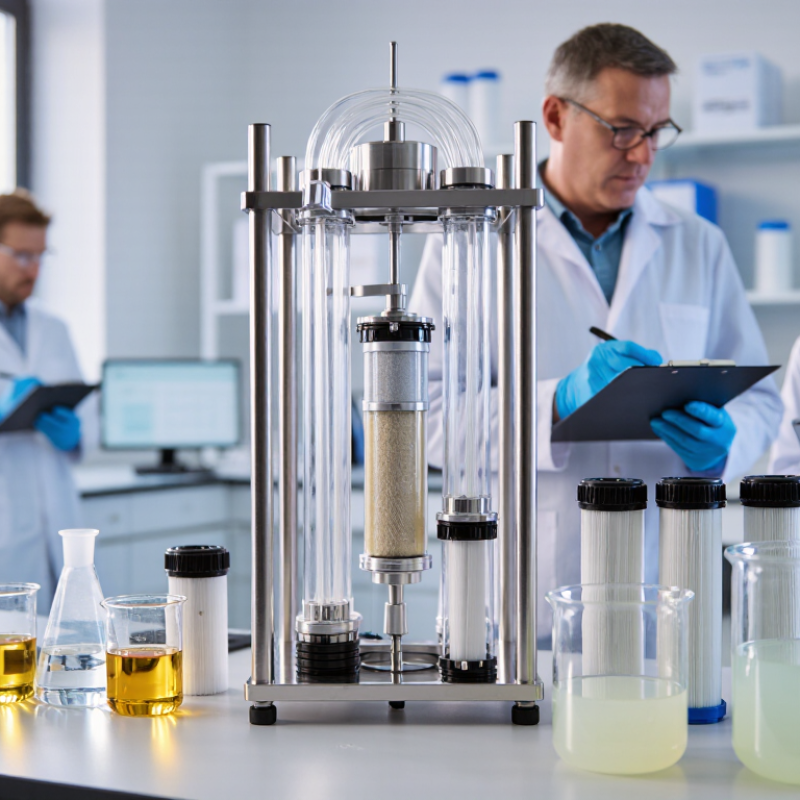
Understanding Depth Filtration and Its Industrial Applications
How to Choose Depth Filtration Products for Sourcing?
Understanding Depth Filtration and Its Industrial Applications
Depth filtration traps particles throughout a thick, porous media structure. Unlike surface filters, it captures contaminants inside the filter matrix. Liquid flows through winding paths. This increases dirt-holding capacity.
depth filters serve many industries. Food processors use them to clarify syrups, oils, and process water. Pharmaceutical facilities apply them during prefiltration and bioburden reduction. Chemical plants use them for pigments, solvents, and coating liquids. In wastewater treatment, they help remove suspended solids before finer polishing stages.
Choosing a product requires more than checking the micron rating. Review the filter media, flow rate, pressure differential, temperature resistance, and chemical compatibility. Ask for data on extractables, batch consistency, and disposal requirements. Reliable suppliers should provide test methods, material declarations, and traceable production records. That documentation matters.
Plant evaluations often reveal hidden problems. A filter may meet its rated flow but clog too quickly in real operation. I have seen systems perform differently after minor changes in viscosity. Short trials help expose those risks. Measure inlet pressure, outlet pressure, throughput, and particle loading. Do not ignore installation errors. Poor sealing can resemble media failure. Sourcing teams should compare total operating cost, not only purchase price. Sometimes, the cheaper option creates more downtime. That lesson is easy to miss.
Comparing Filter Media, Formats, and Performance
Choosing a depth filtration product starts with the filter media, not the catalog number. Cellulose-based media provide strong solids holding capacity, while synthetic fibers often improve chemical resistance and batch consistency. Activated carbon can remove color and trace impurities, but it may also bind valuable proteins. PDA Technical Report No. 26 stresses that filtration performance depends on feed characteristics, pressure, temperature, and process history. A small jar test is more useful than a confident assumption.
Format changes handling. Flat sheets suit laboratory screening and low-volume batches. Capsules reduce assembly work and exposure risk. Lenticular modules offer larger areas, but they need careful sealing and disposal planning. According to BioPlan Associates’ 2024 bioprocessing survey, single-use technologies remain widely adopted in biomanufacturing, driven partly by faster changeover and lower cleaning requirements. That advantage is not universal. A capsule can be convenient, yet its hold-up volume may waste an expensive intermediate.
Performance should be compared through measurable data: throughput, differential pressure, turbidity reduction, extractables, and capacity before blockage. A 2023 industry filtration market report estimated continued growth in depth filtration demand, especially for bioprocessing and water treatment applications. Still, market growth does not prove suitability. Test at the real temperature and solids load. I once trusted a vendor’s clean-feed flux figure; the process slurry behaved differently. The better sourcing file includes raw test curves, validation records, and a defined replacement point.
Evaluating Suppliers, Compliance, and Total Cost
Choosing depth filtration products requires more than comparing pore sizes or unit prices. Supplier evaluation should begin with traceability. Ask for resin or membrane specifications, extractables data, lot-release records, and change-control procedures. A reliable supplier can explain where each component was produced and how deviations are investigated. That conversation matters.
Compliance must fit the intended process. For biopharmaceutical applications, review alignment with current good manufacturing practice, EU GMP Annex 1, and relevant pharmacopeial tests. Request validation packages, integrity-test methods, and certificates for food-contact or process-contact materials when applicable. The 2024 BioPlan Associates industry survey reported continued broad adoption of single-use technologies, mainly because they reduce cleaning demands and improve manufacturing flexibility. Yet adoption does not remove qualification work. Supplier claims still require evidence.
Total cost is often misunderstood. Include filters, housings, testing, labor, storage, freight, disposal, and production losses from premature blockage. A cheaper capsule can become expensive after one failed batch. Compare throughput using your actual fluid, temperature, viscosity, and turbidity. Request a small-scale trial with defined acceptance criteria, such as flow rate and pressure rise. Be cautious with optimistic performance curves. They may reflect clean water, not your process stream. I have seen sourcing teams overvalue a low quotation and underestimate technical support. That mistake is avoidable, but not always. Industry purchasing reports consistently identify supply continuity and quality consistency as major procurement concerns; therefore, dual sourcing and documented contingency plans deserve a place in the total-cost model.
Validating Product Selection Through Testing and Procurement
Choosing a depth filtration product should begin with the process, not a catalog description. Record the liquid’s viscosity, temperature, particle load, and target flow rate. A cloudy sample may behave differently after storage. Test it fresh.
Run comparative trials using representative process fluid. Measure turbidity before and after filtration, pressure drop, throughput, and service life. Check whether performance changes near the filter’s rated capacity. Small-scale tests can reveal channeling, premature blinding, or unexpected extractables. They can also expose a weakness in our assumptions.
Procurement should receive the same technical evidence. Request material specifications, batch records, lot traceability, and documented quality controls. Compare at least three production lots when possible. Ask how the supplier manages raw-material changes and nonconforming products. A supplier audit can verify storage conditions, inspection methods, and sampling practices.
Do not approve a product from one successful trial. That result may reflect unusually clean feed or careful handling. Define acceptance criteria before testing, including maximum pressure, minimum throughput, and acceptable filtrate quality. Review the full cost, including labor, replacement frequency, and waste handling. The cheapest unit may create unstable production.
Keep the test report practical. Include fluid temperature, housing configuration, test duration, and photographs of used media. Engineers and buyers should review the evidence together. Sometimes the final choice remains uncertain. That is a useful warning, not a failure. Further testing may be safer than a confident guess.
How to Choose Depth Filtration Products for Sourcing?
Validation should combine laboratory performance with procurement readiness. The chart shows an illustrative weighted sourcing score out of 100 based on particle retention, throughput, pressure drop, extractables, and supply continuity.
Use standardized test conditions and application-specific acceptance limits before approval. Typical validation checkpoints include microbial retention testing such as ASTM F838 where applicable, extractables assessment, pressure-drop measurement, and throughput testing at the intended process temperature and fluid viscosity.