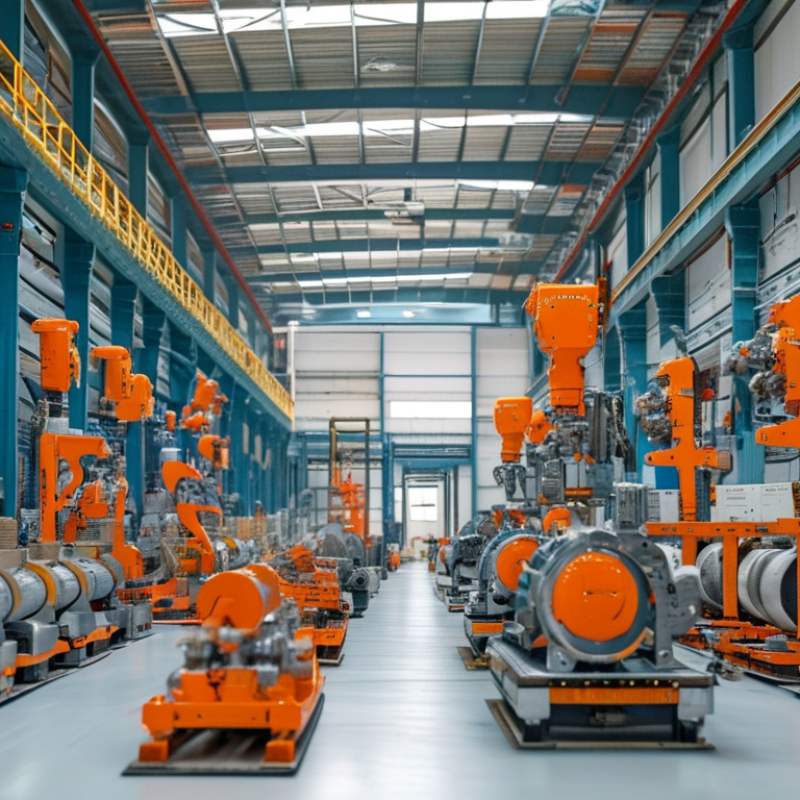
Industrial equipment solutions help global buyers source, compare, and manage machinery across complex international markets. These solutions may include production lines, material handling systems, pumps, compressors, and specialized processing equipment. The right choice depends on more than price. Buyers must examine capacity, operating conditions, energy use, maintenance access, and expected service life.
Real purchasing experience shows that small details often create large costs. A machine may fit a factory floor but fail to match local voltage requirements. A supplier may provide technical drawings but offer weak after-sales support. Reliable evaluation therefore combines supplier records, verified specifications, factory audits, sample testing, and independent inspections. Clear documentation also supports safer installation and smoother customs preparation. Local technicians, spare-part availability, and response times deserve equal attention.
Global projects rarely follow a perfect checklist. That is worth remembering. A lower quotation can hide training costs, delivery delays, or difficult repairs. Even experienced buyers can overlook a critical interface between old and new equipment. This guide explores how professional teams assess industrial equipment solutions from initial requirements to long-term operation. It considers technical suitability, supplier credibility, compliance expectations, total cost of ownership, and practical risk control. The goal is not to recommend one universal machine. It is to help buyers ask better questions, verify evidence, and make decisions that remain dependable after installation. Reliability takes time. Sometimes, careful doubt is the most useful tool.
Industrial equipment solutions for global buyers combine machinery, engineering support, compliance documents, and lifecycle service. They are not simply machines shipped across borders. A practical solution matches production volume, local power standards, operating skills, and maintenance access. The International Energy Agency’s Energy Efficiency 2023 report estimates that industry consumes about 37% of global final energy. This makes efficient motors, heat recovery, and energy monitoring commercial priorities. The International Federation of Robotics reported 541,302 industrial robots installed worldwide in 2023. Automation is expanding, but it still requires trained operators and reliable integration.
Tips: Ask suppliers for total-cost calculations, not only purchase prices. Request test records, spare-parts lead times, installation drawings, and remote-support procedures. Compare energy use per unit produced. A lower price can hide expensive downtime. Check technical documents with local specialists before purchase.
Experienced buyers also test assumptions. A high-capacity line may underperform when demand changes or utilities fluctuate. A pilot cell, factory acceptance test, and staged delivery can expose weak points early. Data should include uptime, output, reject rate, energy consumption, and service response time. Industry reports provide useful benchmarks, yet site conditions remain decisive. This is where many procurement plans become too optimistic. The strongest global equipment solution is measurable, serviceable, and adaptable, even when the original specification needs revision.
Indicative energy-saving potential from commonly deployed industrial efficiency solutions. Actual results vary by equipment condition, operating profile, system design, and maintenance practices. The ranges reflect widely reported efficiency opportunities for industrial motor systems, compressed air, pumping, and HVAC applications.
For global buyers, industrial equipment solutions mean selecting machines around production risks, not simply purchasing hardware. The main categories include material-handling systems, process equipment, machine tools, pumps, compressors, and industrial automation. Each serves a different operating condition. Forklifts and conveyors move pallets through warehouses. Pumps transfer liquids, while compressors deliver controlled air. Machine tools cut or shape metal. In food, chemical, and water facilities, process equipment must match temperature, pressure, viscosity, and hygiene requirements. That detail is often underestimated.
Automation connects sensors, controllers, robots, and software to improve repeatability and traceability. The International Federation of Robotics reported 541,302 industrial robots were installed worldwide in 2023. This figure indicates strong demand for automated production. However, robot numbers alone cannot prove suitability. Buyers should check payload, cycle time, reach, ingress protection, spare-parts access, and operator training. Energy performance matters. The International Energy Agency reports that industry consumes about 37% of global final energy, making motor efficiency and load control commercially important.
A reliable specification includes duty cycle, local voltage, ambient temperature, installation space, safety controls, and expected service life. It should request test records, maintenance intervals, and verified performance data. Field engineers often find that the cheapest quote hides integration work or downtime. That lesson remains uncomfortable. Global buyers should compare total ownership cost, documentation quality, commissioning support, and measurable output. A small pilot may reveal vibration, heat, or workflow problems before full deployment.
| Equipment Category | Equipment Type | Primary Function | Typical Performance Range | Common Industrial Applications | Key Selection Criteria | Typical Utilities or Requirements |
|---|---|---|---|---|---|---|
| Material Handling | Industrial Conveyors | Move bulk materials, components, packages, or finished products continuously between process stages. | Belt speeds commonly range from approximately 0.5 to 3 m/s; capacity varies by belt width, material density, and incline. | Warehousing, mining, food processing, parcel handling, automotive assembly, and distribution centers. | Load capacity, belt material, incline angle, cleaning requirements, layout, and required throughput. | Electric drive, structural supports, guarding, and suitable floor or foundation space. |
| Material Handling | Industrial Cranes and Hoists | Lift, position, and transport heavy loads within production, maintenance, and storage areas. | Rated capacities commonly range from 1 to more than 100 tonnes, depending on crane configuration and duty class. | Steel fabrication, shipbuilding, power generation, machinery production, construction, and maintenance workshops. | Safe working load, span, lift height, duty cycle, travel speed, building structure, and safety controls. | Electrical power, runway beams or support structures, limit switches, brakes, and operator controls. |
| Compressed Air | Rotary Screw Air Compressors | Supply compressed air for pneumatic tools, actuators, instruments, and production equipment. | Common discharge pressures are approximately 7 to 13 bar; capacity depends on motor size and compressor design. | Manufacturing, packaging, electronics assembly, vehicle service, food production, and process automation. | Free air delivery, pressure stability, air quality, duty cycle, energy efficiency, noise, and maintenance access. | Electrical power, ventilation, air treatment, receiver capacity, condensate management, and distribution piping. |
| Pumping Systems | Centrifugal Pumps | Transfer clean or moderately contaminated liquids through process, cooling, water, and circulation systems. | Flow and head vary widely; many industrial units operate from a few m³/h to several thousand m³/h. | Water treatment, chemical processing, irrigation, cooling systems, oil and gas facilities, and general manufacturing. | Fluid properties, flow rate, total dynamic head, temperature, corrosion resistance, seal design, and efficiency. | Electric motor or engine, suction and discharge piping, valves, strainers, and appropriate foundations. |
| Thermal Processing | Industrial Boilers | Generate steam or hot water for heating, sterilization, power generation, and process operations. | Steam output may range from small package systems below 1 t/h to large utility boilers exceeding 100 t/h. | Food and beverage, chemicals, textiles, paper, hospitals, district heating, and power-related processes. | Steam demand, operating pressure, fuel availability, efficiency, emissions limits, water quality, and redundancy. | Fuel or electrical supply, feedwater treatment, water pumps, blowdown systems, ventilation, and flue management. |
| Thermal Processing | Industrial Furnaces and Ovens | Heat, dry, cure, melt, anneal, or otherwise thermally process materials and components. | Operating temperatures commonly range from approximately 100°C for drying to above 1,200°C for high-temperature processing. | Metal treatment, ceramics, glass, powder coating, composites, electronics, food processing, and laboratory production. | Temperature uniformity, chamber size, heating method, atmosphere control, cycle time, insulation, and exhaust design. | Electricity or fuel, ventilation, temperature controls, insulation, exhaust treatment, and fire protection. |
| Process Separation | Industrial Filtration Systems | Remove suspended solids, particles, contaminants, or microorganisms from liquids or gases. | Filtration ratings may range from coarse screens above 100 microns to membrane systems below 1 micron. | Water treatment, pharmaceuticals, food and beverage, chemical processing, dust collection, and compressed-air treatment. | Particle size, flow rate, pressure drop, chemical compatibility, filter life, cleaning method, and hygiene requirements. | Process piping, differential-pressure monitoring, drainage, replacement elements, and waste-handling arrangements. |
| Size Reduction | Industrial Crushers and Grinders | Reduce the size of mined materials, recycled products, minerals, chemicals, or other solids. | Output particle size can range from coarse aggregate to fine powders, depending on equipment configuration and feed material. | Mining, quarrying, cement, recycling, construction materials, chemicals, and agricultural processing. | Feed size, hardness, moisture, required product size, throughput, wear resistance, dust control, and maintenance access. | Electric drive, feeders, discharge conveyors, dust extraction, structural support, and replaceable wear parts. |
| Production Machinery | Computer Numerical Control Machine Tools | Perform precision cutting, drilling, turning, milling, and finishing of manufactured components. | Positioning accuracy and repeatability depend on machine design; industrial systems commonly support multi-axis machining. | Aerospace components, automotive parts, medical devices, general engineering, tooling, and precision manufacturing. | Work envelope, spindle speed, axis travel, accuracy, material type, tooling system, automation, and software compatibility. | Electrical power, cutting-fluid systems, compressed air, chip removal, stable foundations, and trained operators. |
| Environmental Control | Industrial Dust Collectors | Capture airborne dust and particulates to protect workers, equipment, products, and the surrounding environment. | Airflow is commonly specified in m³/h; collection efficiency depends on filter media, particle size, and system design. | Woodworking, cement, metalworking, pharmaceuticals, food processing, mining, and bulk-material handling. | Dust characteristics, airflow, filtration efficiency, explosion risk, pressure drop, noise, cleaning method, and disposal needs. | Fans, ductwork, filter elements or bags, collection bins, electrical controls, and suitable exhaust arrangements. |
| Power Generation | Industrial Diesel Generator Sets | Provide standby, prime, or emergency electrical power when grid supply is unavailable or unreliable. | Rated outputs commonly range from tens of kVA to several MVA, depending on the generator configuration. | Factories, construction sites, data facilities, hospitals, telecommunications, mining operations, and remote installations. | Required load, standby or prime duty, fuel consumption, voltage, frequency, transfer time, emissions, and acoustic control. | Fuel storage, exhaust system, ventilation, cooling, battery starting system, control panel, and foundation. |
| Cooling Systems | Industrial Chillers | Remove heat from process fluids, buildings, machinery, or temperature-controlled production environments. | Cooling capacity may range from a few kW for small processes to several MW for large facilities. | Plastics manufacturing, food processing, pharmaceuticals, data facilities, chemical plants, and commercial buildings. | Cooling load, leaving-fluid temperature, refrigerant type, ambient conditions, energy efficiency, redundancy, and water availability. | Electrical power, chilled-water or process-fluid piping, pumps, heat rejection equipment, controls, and ventilation. |
| Automation and Control | Programmable Logic Controller Systems | Monitor sensors and control machines, production lines, safety functions, and sequential industrial processes. | System capacity is determined by input/output count, scan time, communication networks, and control complexity. | Assembly lines, packaging, water treatment, material handling, energy systems, and process manufacturing. | Number and type of I/O points, response time, communication protocols, safety requirements, expansion capacity, and cybersecurity. | Control cabinet, sensors, actuators, industrial networks, programming software, backup power, and trained personnel. |
Note: Performance ranges are indicative industry values. Actual specifications depend on material characteristics, operating conditions, local regulations, duty cycle, installation design, and required safety standards.
Global buyers assess industrial equipment by production reality, not catalogue features. The IEA’s Energy Efficiency 2023 report estimates that industry consumes about 37% of global final energy. Therefore, buyers examine motor efficiency, heat loss, idle power, and maintenance access. A machine may produce faster, yet waste more energy between shifts.
Capacity is tested against actual demand. Buyers compare peak loads, product variation, operator skills, and local utilities. The World Bank’s Logistics Performance Index 2023 assessed 139 economies and highlighted reliability as a key supply-chain factor. Equipment must survive delayed parts, uneven transport, and different service conditions. Spare-part availability matters.
Not just the purchase price.
A practical assessment includes total cost over five to ten years. Buyers request noise levels, safety documentation, training plans, warranty terms, and measurable performance data. Site trials can reveal vibration, awkward controls, or cleaning problems that brochures hide. Those details are easy to underestimate. I have seen technically strong proposals fail because installation space was measured poorly. Energy models can also be optimistic when they ignore seasonal loads and operator habits. For global procurement, buyers should verify testing methods, local compliance requirements, cybersecurity controls, and language support before signing. The strongest decision is not always the newest machine. It is the equipment whose limits are understood, documented, and honestly priced.
Global industrial equipment sourcing now demands more than a low quotation. McKinsey reported that 93% of supply chain leaders planned to increase resilience after recent disruptions. Buyers should therefore compare total ownership cost, lead time, spare parts access, and technical support. A supplier’s factory address is not enough. Ask for production capacity, quality records, inspection procedures, and realistic delivery evidence. Request a sample inspection report. Small details matter, such as motor ratings, control-panel standards, surface treatment, and packaging for sea transport.
Customization should begin with measurable operating conditions. Share load, duty cycle, voltage, temperature, material contact, and installation limits. A supplier that only copies a drawing may miss the real risk. Use a requirement matrix, then approve drawings before fabrication. The International Organization for Standardization’s ISO Survey 2023 recorded more than 1.5 million ISO 9001 certificates worldwide, but certification alone cannot prove equipment performance. Factory audits, witnessed testing, and serial-number records add stronger evidence. They also expose uncomfortable gaps.
Supplier selection needs a weighted scorecard. Price might receive 25%, technical fit 25%, quality 20%, delivery 15%, and after-sales support 15%. Adjust those weights for critical equipment. Check references from comparable applications, not unrelated industries. Require clear warranty terms and documented change control. A cheaper machine can become expensive when one seal takes eight weeks to replace. However, buyers can over-specify equipment and waste budget. That mistake deserves review. A practical shortlist combines verified capability, transparent communication, and customization discipline.
Industrial equipment solutions for global buyers extend well beyond purchasing a machine. Installation should include foundation checks, utility connections, safety guards, and operator training. A practical supplier provides clear drawings, labeled components, and remote guidance before arrival. On-site commissioning then confirms vibration, temperature, pressure, and output performance.
Compliance requires destination-specific attention. Buyers should verify electrical standards, documentation, labeling, emissions rules, and workplace safety requirements before shipment. Qualified technicians can prepare inspection records and operating procedures. Requirements change across regions, and translated manuals may still contain unclear instructions. That weakness deserves review before installation.
Maintenance planning should include spare parts, service intervals, troubleshooting procedures, and response times. A simple logbook can reveal unusual noise, heat, or repeated stoppages early. From field experience, rushed handovers often create avoidable downtime.
Tips: Request a complete installation checklist before signing the purchase agreement. Confirm who handles local permits and final testing. Store critical spare parts in a dry, labeled cabinet. Train more than one operator, because staff changes happen. Review performance after thirty, ninety, and one hundred eighty days. Lifecycle support should remain measurable, not just promised. Ask for service records, software update procedures, equipment inspection schedules, and a clear escalation path. No plan is perfect. Leave room for lessons from actual use.