China’s food manufacturing sector is changing quickly, driven by automation, traceability, energy efficiency, and rising consumer expectations. This article examines ten leading Chinese food production systems manufacturers and the capabilities that distinguish them.
The review considers equipment design, processing accuracy, hygienic engineering, production capacity, after-sales service, and integration with digital control platforms. These factors matter on a real factory floor. Stainless-steel conveyors must withstand daily washing. Filling systems must maintain stable weights. Packaging lines must reduce product loss without slowing output.
José Graziano da Silva, former Director-General of the Food and Agriculture Organization, said, “There is no food security without food safety.” His statement captures the responsibility behind modern food production systems. Reliable machinery supports safer handling, consistent quality, and better resource management. However, impressive specifications do not always guarantee dependable performance.
A manufacturer may offer advanced robotics but provide limited technical support. Another may deliver strong customization but lack international certification experience. These differences deserve careful attention. This overview therefore looks beyond marketing claims, where possible, and focuses on practical evidence, engineering depth, compliance awareness, and customer service.
The ranking is not absolute. Factory size, product category, budget, and regional support can change the best choice. Some conclusions may also require further verification as companies expand their technologies. Even so, the selected manufacturers provide a useful starting point for buyers, investors, engineers, and food-processing professionals comparing China’s evolving industrial landscape.
Food production systems in China connect farms, processors, laboratories, warehouses, and distribution networks. They manage how ingredients become safe, consistent food products. A typical system may include grain cleaning, vegetable washing, cooking, filling, sealing, storage, and delivery. Each stage needs defined procedures and trained workers.
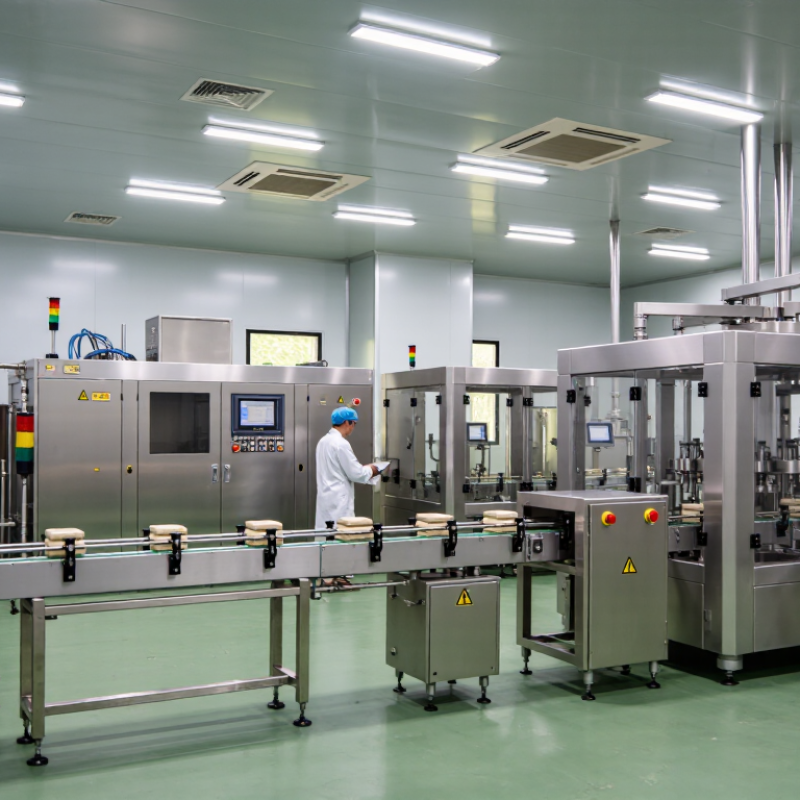
Modern facilities usually use stainless-steel equipment, controlled water supplies, and automated temperature records. Quality teams check raw materials before production begins. They also test moisture, acidity, allergens, and microbial safety when required. Batch codes help workers trace products back to a supplier, production line, or processing date. Small details matter.
China’s food manufacturers often follow food safety management systems such as HACCP and ISO-based procedures. Cold-chain products require refrigerated storage and monitored transport. Dry foods need protection from humidity, pests, and cross-contamination.
In practical factory assessments, documentation can be as important as machinery. A fast production line is not reliable without accurate cleaning records. No system is perfect. Records may be incomplete, sensors may need calibration, and workers can misunderstand instructions. These weaknesses deserve honest review, not decoration. Strong systems improve through audits, corrective actions, supplier checks, and repeated staff training. Cost, regional logistics, and changing consumer expectations also influence how each production system is designed.
Selecting China’s top ten food production systems manufacturers requires more than checking factory size or online visibility. Our evaluation begins with verifiable production records, documented certifications, and evidence of completed projects. We review equipment capacity, processing accuracy, sanitation design, automation levels, and maintenance response. Factory visits matter. They reveal details that brochures often hide, such as cable protection, drainage quality, and spare-parts storage.
Technical performance receives strong weight in the assessment. We compare temperature control, filling precision, material compatibility, energy use, and line stability during continuous operation. Engineers also examine whether systems can handle different product textures, package sizes, and production speeds. Safety procedures, worker training, and traceability records are checked against applicable market requirements. Customer references add practical evidence, especially regarding installation delays, troubleshooting, and long-term operating costs.
The ranking is not based on one impressive demonstration. It combines audited documents, site observations, technical interviews, and user feedback. However, the method has limits. Some manufacturers disclose little financial or service data, while larger companies may appear stronger because they publish more information. A smaller specialist could be undervalued. We therefore record evidence quality beside every score and revisit unclear claims. Delivery performance can also change with supply conditions, so older project results require caution. The final ten reflect balanced performance, not permanent superiority.
| No. | Selection Dimension | Weight | Evidence Used for Evaluation | Scoring Method | Reason for Inclusion |
|---|---|---|---|---|---|
| 1 | Food-Processing System Coverage | 18% | Verified product documentation covering equipment such as conveying, mixing, filling, packaging, cleaning, or process-control systems. | 0–10 points based on the breadth and depth of documented food-production applications. | Measures whether the manufacturer can support complete or integrated production lines. |
| 2 | Manufacturing Capability | 15% | Factory information, production facilities, engineering resources, quality-control procedures, and documented manufacturing scope. | 0–10 points based on available production resources and process control. | Distinguishes manufacturers from trading companies and resellers. |
| 3 | Food-Safety and Quality Systems | 14% | Valid certificates or audited records relating to ISO 9001, ISO 22000, HACCP, applicable Chinese GB standards, and documented traceability controls. | 0–10 points according to certificate validity, audit coverage, and relevance to food-contact equipment. | Food systems require controlled hygiene, materials, documentation, and traceability. |
| 4 | Engineering and Customization | 12% | Technical drawings, process-flow designs, automation capability, integration examples, and documented customization procedures. | 0–10 points based on design capability and ability to adapt systems to different processes. | Food factories often require customized layouts, recipes, capacities, and control systems. |
| 5 | Product Reliability and Performance | 10% | Published specifications, factory acceptance tests, commissioning records, warranty terms, and independently verifiable customer references. | 0–10 points based on the quality and consistency of performance evidence. | Reliable uptime directly affects production continuity and operating costs. |
| 6 | Domestic and Export Experience | 8% | Documented project history, export records where available, installation locations, and experience with international technical requirements. | 0–10 points based on verified geographic and application experience. | Broader project experience can indicate stronger implementation and documentation capability. |
| 7 | After-Sales Service and Spare Parts | 8% | Service channels, commissioning support, operator training, maintenance documentation, response procedures, and spare-parts availability. | 0–10 points based on service coverage and documented support processes. | Technical support reduces downtime after installation and during maintenance. |
| 8 | Energy, Water, and Resource Efficiency | 5% | Equipment energy ratings, water-use data, cleaning-in-place information, waste-reduction features, and measurable operating parameters. | 0–10 points based on the availability and comparability of efficiency data. | Resource efficiency affects total cost of ownership and sustainability performance. |
| 9 | Compliance and Risk Transparency | 5% | Business registration information, certification records, product manuals, safety documentation, contract terms, and verifiable company disclosures. | 0–10 points based on the completeness, consistency, and verifiability of published information. | Transparent documentation helps buyers identify compliance and procurement risks. |
| 10 | Commercial Value and Project Fit | 5% | Total-cost estimates, lead-time information, warranty coverage, production capacity match, and compatibility with the buyer’s process requirements. | 0–10 points based on technical fit, lifecycle value, and commercial clarity. | The most suitable supplier is not always the lowest-price supplier. |
| Total Evaluation Weight | 100% | The ten highest-scoring eligible manufacturers are selected after evidence verification and removal of incomplete or unverifiable submissions. | |||
China’s leading food production systems manufacturers now serve bakeries, beverage plants, dairy processors, and prepared-food factories. This profile uses capability, compliance, export experience, and after-sales support rather than brand visibility alone. Market research from Mordor Intelligence estimates continued growth in China’s food processing equipment sector through 2030, driven by automation, traceability, and safer production lines. The exact ranking remains difficult because many suppliers are privately held.
The ten leading profiles typically include complete-line integrators, filling and packaging specialists, cold-chain equipment makers, mixing and cooking system manufacturers, and inspection technology providers. Strong suppliers offer stainless-steel contact surfaces, programmable controls, clean-in-place systems, and documented validation records.
The Food and Agriculture Organization reported that food loss remains a major global challenge in 2024. Therefore, accurate dosing, temperature control, and sealed transfer systems deserve close attention. Some factories still overstate automation benefits. That deserves scrutiny.
Tips: Request factory acceptance test records, energy data, spare-parts response times, and references from similar facilities. Check whether software supports audit trails and multilingual operator training. A lower purchase price may hide higher cleaning labor, water use, or maintenance costs. Independent testing is useful. Even experienced buyers can miss integration gaps between the conveyor, sensors, and packaging unit. When comparing China’s top ten manufacturers, inspect real production evidence, not only polished demonstrations.
China Top 10 Food Production Systems Manufacturers
China’s leading food production system manufacturers differ mainly in automation depth and product coverage. Their core categories include filling, sealing, baking, sterilisation, cold-chain handling, inspection, and warehouse integration. According to the International Federation of Robotics, China installed 276,288 industrial robots in 2023, representing about 51% of global installations. This scale supports faster packaging and more consistent handling. However, robotics alone does not guarantee hygienic production.
In practical factory evaluations, key technologies include machine vision, servo control, clean-in-place systems, traceability software, and predictive maintenance. Vision inspection can detect uneven seals, missing labels, and surface defects at line speed. Thermal processing systems need accurate temperature records, especially for low-acid foods. FAO reports that 13.2% of food is lost between harvest and retail, so stable processing and cold-chain equipment remain important. A high output figure can hide excessive waste, difficult cleaning, or poor changeover design. I would compare total ownership cost, not only catalogue speed. This is where many rankings become less reliable.
Tips: Request production samples before purchasing. Check cleaning time, spare-part access, and software compatibility. Ask for verified energy data under real operating conditions. A small pilot line may reveal problems that a showroom cannot.
Choosing a suitable Chinese food production systems manufacturer requires more than comparing prices. Define the product, output, sanitation level, and local utilities first. A noodle line and a frozen-meal line need different heating, cooling, and cleaning designs. Request process drawings, material certificates, hygienic weld photos, and a complete spare-parts list. The equipment should support traceability, documented cleaning, and validated temperature control.
Automation capacity is a useful signal, but not proof of food-sector competence. The International Federation of Robotics reported 276,288 industrial robot installations in China during 2023, representing about 51% of global installations. This shows strong manufacturing depth. However, ask whether engineers have handled food-contact surfaces, allergen changeovers, moisture, and corrosive cleaning agents. A fast robot does not fix poor sanitation design. Small details matter.
Audit the factory before signing. Check machining accuracy, electrical testing, software backups, and quality records from comparable projects. Ask for a Factory Acceptance Test with measurable targets for speed, yield, noise, and product temperature. Then require a Site Acceptance Test after installation. ISO’s 2023 survey recorded more than one million ISO 9001 certificates worldwide, so certification can support credibility, but it cannot replace an audit. I would not trust a polished showroom alone. A weak point remains: remote inspections can miss subcontracted work. Verify key components, production capacity, and after-sales response directly, preferably through independent technical reviewers.