Top 10 Material Handling Systems for Global Buyers
Choosing among the top 10 material handling systems requires more than comparing prices or automation levels. Global buyers must examine throughput, labor conditions, maintenance access, energy use, safety design, and integration requirements. A conveyor may suit steady carton flow. An automated storage and retrieval system may better support dense inventory. Mobile robots can improve flexibility, but they still require reliable mapping, charging plans, and trained operators.
Real facilities reveal the difference.
Martin Christopher, emeritus professor of marketing and logistics, wrote, “Supply chains compete, not companies.” His observation applies directly to material handling systems. Equipment performance affects delivery speed, order accuracy, warehouse capacity, and customer trust. A system that performs well in one country may struggle elsewhere because of voltage standards, building layouts, climate, workforce skills, or local service coverage.
This guide compares ten widely used system types for international buyers. It considers conveyors, pallet racking, forklifts, sortation equipment, AS/RS technology, AGVs, AMRs, cranes, vertical lift modules, and warehouse control platforms. Each option has practical strengths and inconvenient limitations. Automation is not always the smartest answer. Sometimes a well-designed manual process delivers better value.
The ranking is useful, but not absolute. Budget, product dimensions, order profiles, and future expansion plans can change the decision. Buyers should request measurable data, inspect reference installations, and test integration before signing contracts. Even then, uncertainty remains. A system may look efficient on paper and disappoint during peak season. Careful evaluation reduces that risk.
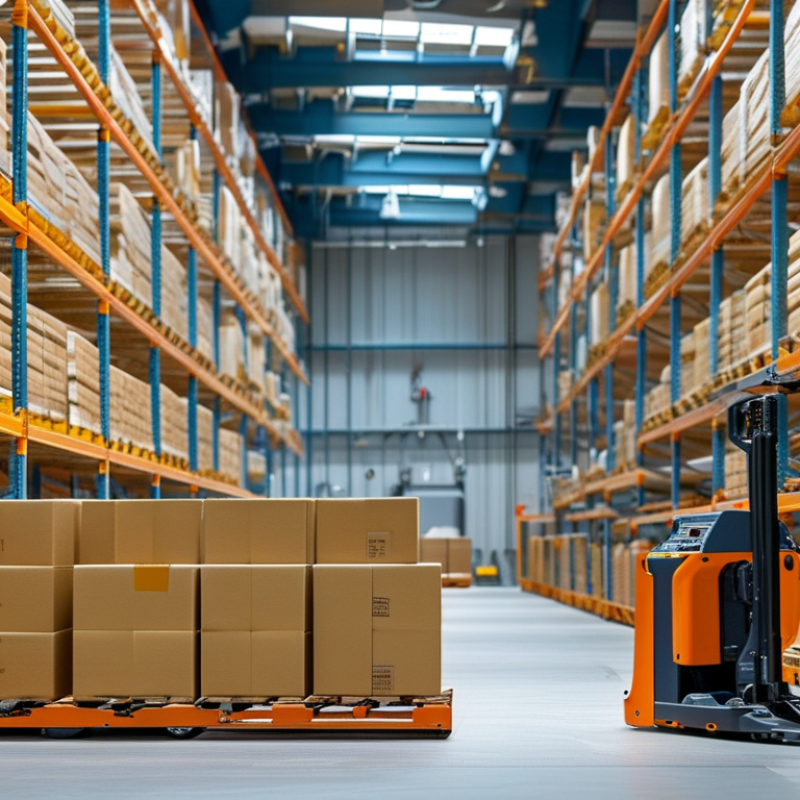
Material Handling Systems: Definition, Scope, and Core Functions
Material handling systems are the connected methods used to move, store, protect, and track materials. They cover manual work, powered equipment, storage structures, software, and safety controls. For global buyers, the scope begins at receiving and ends at dispatch or production use. It also includes packaging, identification, inventory visibility, maintenance, and operator training. A useful definition must include information flow. Material may arrive on time, yet poor data can still stop a production line.
The ten common system groups include conveyors, lifts, cranes, automated storage, picking equipment, sortation, mobile robots, pallet systems, loading solutions, and warehouse control software. Each serves a different movement problem. Conveyors support steady flows. Cranes handle dense vertical storage. Software coordinates tasks and records status. During site assessments, I check travel distance, load weight, aisle width, temperature, dust, and peak demand. These details show whether a proposal fits real work rather than a catalogue diagram.
Core functions should be measured clearly: receiving accuracy, storage density, picking speed, damage rate, energy use, and worker exposure. Controls should support emergency stops, inspection routines, and traceable maintenance. A technically impressive system may fail when staff cannot adjust it safely. That happens more often than buyers admit. Regional infrastructure, language, training capacity, service response, and applicable standards also deserve attention. No ranking is permanent. Demand changes, data is incomplete, and a cheaper design can become expensive after installation.
Top 10 Material Handling Systems for Global Buyers - Material Handling Systems: Definition, Scope, and Core Functions
| Rank | Material Handling System | Definition and Core Function | Typical Load or Material | Typical Throughput | Automation Level | Common Applications | Key Advantages | Main Selection Considerations |
|---|---|---|---|---|---|---|---|---|
| 1 | Conveyor Systems | Fixed or modular equipment that continuously transports unit loads, cartons, totes, pallets, or bulk materials between defined points. | Cartons, totes, parcels, pallets, bags, components, and bulk solids. | Up to approximately 10,000 units/hour, depending on design. | Manual to fully automated | Warehousing, distribution, manufacturing, parcel handling, and airport logistics. | High repeatability, efficient long-distance movement, and easy integration with sortation and storage systems. | Load dimensions, weight, travel distance, incline, noise, sanitation, and available floor space. |
| 2 | Automated Storage and Retrieval Systems | Computer-controlled equipment that stores and retrieves loads from designated storage locations with limited manual intervention. | Pallets, totes, trays, cartons, bins, and small parts. | Approximately 50–600 storage or retrieval cycles/hour. | Highly automated | High-density warehouses, cold storage, spare-parts centers, and production buffers. | Improves space utilization, inventory accuracy, operator safety, and order consistency. | Building height, load stability, software integration, fire protection, maintenance access, and capital cost. |
| 3 | Automated Guided Vehicle Systems | Mobile robots that follow programmed routes or digital maps to transport materials between workstations, storage areas, and docks. | Pallets, racks, carts, bins, components, and work-in-process materials. | Typically 10–100 transport missions/hour per vehicle. | Semi-automated to fully automated | Factories, distribution centers, hospitals, warehouses, and clean production areas. | Flexible routing, reduced manual travel, improved traceability, and scalable vehicle fleets. | Traffic control, navigation method, floor quality, battery charging, payload, and pedestrian safety. |
| 4 | Autonomous Mobile Robot Systems | Software-connected mobile robots that navigate dynamic environments and adjust routes without relying exclusively on fixed infrastructure. | Totes, cartons, shelves, carts, kits, and individual items. | Usually 20–150 missions/hour per robot. | Highly automated | Goods-to-person picking, kitting, replenishment, e-commerce fulfillment, and internal transport. | Fast deployment, adaptable layouts, reduced walking distance, and fleet-based scalability. | Navigation accuracy, wireless coverage, software interoperability, charging strategy, and aisle congestion. |
| 5 | Pallet Racking Systems | Structural storage frameworks designed to hold palletized goods in horizontal rows and vertical levels for organized access. | Standard pallets, cases, drums, containers, and packaged goods. | Determined by handling equipment and storage policy. | Manual to semi-automated | General warehouses, manufacturing storage, wholesale distribution, and cold-chain facilities. | Uses vertical space efficiently, supports high inventory visibility, and offers multiple configuration options. | Load capacity, seismic conditions, aisle width, fire codes, forklift type, beam levels, and inspection requirements. |
| 6 | Sortation Systems | Automated equipment that identifies, separates, and directs items to different destinations according to orders, routes, or product attributes. | Parcels, cartons, totes, envelopes, and packaged products. | Approximately 2,000–20,000 items/hour. | Highly automated | E-commerce fulfillment, parcel hubs, retail distribution, postal operations, and order consolidation. | High speed, accurate destination assignment, and improved order cycle times. | Item size range, barcode or vision quality, induction rate, divert accuracy, noise, and maintenance complexity. |
| 7 | Vertical Lift Modules | Enclosed vertical storage units that automatically bring trays or carriers to an operator-access point. | Small parts, tools, maintenance items, electronic components, and medical supplies. | Typically 20–100 retrieval cycles/hour. | Semi-automated to fully automated | Tool rooms, spare-parts storage, manufacturing cells, laboratories, and healthcare facilities. | High vertical density, controlled access, reduced operator travel, and improved inventory security. | Ceiling height, tray dimensions, item weight, retrieval time, environmental conditions, and system integration. |
| 8 | Bulk Material Handling Systems | Integrated equipment for receiving, conveying, storing, feeding, measuring, and loading large quantities of loose materials. | Grain, cement, minerals, aggregates, chemicals, powders, pellets, and biomass. | From several tonnes/hour to more than 1,000 tonnes/hour. | Manual to fully automated | Mining, agriculture, cement, food processing, energy, ports, and chemical processing. | Continuous flow, high capacity, reduced manual handling, and compatibility with large-scale processing. | Material characteristics, dust control, corrosion, moisture, explosion risk, wear resistance, and environmental regulations. |
| 9 | Dock and Loading Systems | Equipment and infrastructure used to transfer materials safely between warehouses, vehicles, containers, and external transport networks. | Pallets, cartons, roll cages, drums, packaged goods, and temperature-controlled products. | Vehicle and site dependent; commonly 10–60 pallets/hour per dock. | Manual to semi-automated | Distribution centers, manufacturing plants, retail warehouses, cold-chain sites, and freight terminals. | Improves loading speed, worker safety, weather protection, and vehicle turnaround time. | Vehicle range, dock height, load weight, traffic flow, safety barriers, temperature control, and local building codes. |
| 10 | Warehouse Management and Control Systems | Digital platforms that coordinate inventory, locations, orders, labor, equipment, and material flows across warehouse operations. | Inventory records, order lines, pallets, cases, totes, and serialized items. | Scales with facility capacity and transaction volume. | Digital and highly automated | Multi-site warehousing, fulfillment, manufacturing logistics, inventory control, and transport coordination. | Centralized visibility, improved inventory accuracy, process standardization, analytics, and equipment coordination. | Enterprise integration, data quality, cybersecurity, implementation time, user training, and regional compliance. |
Note: Throughput figures are indicative planning ranges. Actual performance depends on load characteristics, layout, operating hours, labor practices, equipment configuration, and software integration.
Related Posts
-
What is Material Handling Systems and Why Are They Essential?
-
Top 10 Palletizing Systems in China You Should Know?
-

2026 How to Implement Effective Process Engineering Solutions?
-
How to Choose the Best Industrial Equipment Solutions for Your Needs?
-

Top Food Manufacturing Equipment Suppliers Worldwide?
-
Top Conveyor System Solutions for 2026 What You Need to Know?