China Top Electronic Shisha Suppliers for Global Buyers
China Top Electronic Shisha Suppliers for Global Buyers
Choosing an Electronic Shisha supplier in China takes more than comparing unit prices. Buyers need clear product specifications, consistent quality checks, dependable communication, and records that support independent verification. Small details matter: a clearly labeled component, a batch number that matches inspection records, or packaging that protects devices during a long shipment. A polished catalog is useful, but it cannot replace evidence from production.
In this guide, sourcing specialist Lin Wei offers a practical principle: “A reliable supplier makes quality visible before production begins.” Use that idea to assess manufacturers and trading companies, request sample units, and ask how defects are recorded and handled. Compare battery and materials documentation, production capacity, customization limits, lead times, and after-sales support. Ask direct questions. Keep written answers.
No supplier should be selected on promises alone. Verify business details and test samples through suitable independent processes. Requirements differ across markets, so buyers should confirm applicable product, labeling, and import requirements with qualified local professionals. This guide provides a starting point, not a substitute for that review. Supplier claims can sound convincing; some may still prove incomplete. That is worth remembering. Read on for practical ways to compare China-based suppliers, spot gaps in their documentation, and build a sourcing process grounded in evidence rather than sales language.
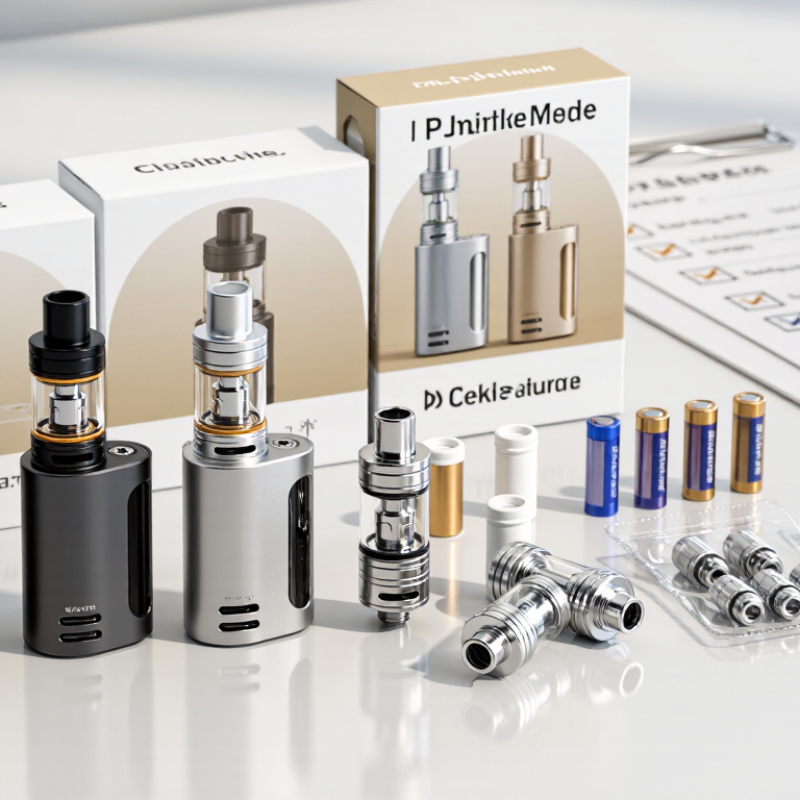
Electronic Shisha Basics: Device Types, Components, and E-Liquid Formats
Electronic shisha devices generally use a battery, control circuit, heating coil, liquid chamber, and mouthpiece. The battery powers the coil, which warms the liquid into an inhalable aerosol. Designs include rechargeable open systems, sealed pod-style units, and integrated disposable formats. Each has different filling, charging, and maintenance needs. Small details matter: a loose mouthpiece or poorly seated pod can cause leaks.
E-liquid is commonly supplied in sealed cartridges or refill bottles. Formulations vary in base liquids, flavorings, and nicotine content; buyers should verify clear labeling and consistent batch specifications. The National Academies’ 2018 review of e-cigarette evidence identified substances such as metals and volatile organic compounds in some aerosols. That finding supports careful component and liquid quality checks, not assumptions based on appearance alone. Labels can be incomplete.
For market context, Grand View Research estimated the broader global e-cigarette and vape market at US$22.45 billion in 2023; this is not a shisha-only figure. The scale makes specification sheets useful. Compare battery capacity, chamber design, liquid compatibility, and documented quality controls across suppliers. A familiar-looking device may still differ in airflow and output. That distinction is easy to miss.
| Category | Type or Component | Typical Characteristics | Global Buyer Considerations |
|---|---|---|---|
| Device type | Disposable electronic shisha | Usually supplied as a prefilled unit with an integrated battery and heating element. The device is generally intended to be discarded when its liquid or battery is depleted. | Confirm local rules for disposable products, battery transport, waste collection, liquid capacity, and nicotine content before importing. |
| Device type | Rechargeable pod device | Uses a rechargeable battery with replaceable or refillable pods. Depending on the design, the pod may contain an integrated coil or use a separate replaceable coil. | Check pod availability, charging specifications, replacement-part supply, and whether the pod is refillable or sealed. |
| Device type | Refillable tank device | Holds user-added e-liquid in a tank or reservoir. The coil and wick are commonly replaceable, although designs vary. | Confirm tank capacity, coil compatibility, refill method, leakage testing, and instructions for cleaning and maintenance. |
| Device type | Rechargeable shisha-style pen | A pen-shaped electronic device that may use a prefilled cartridge, a refillable reservoir, or a replaceable pod. Product features depend on the model. | Request clear specifications for the battery, cartridge format, charging connection, and compatible liquids rather than relying on the product category name. |
| Core component | Battery and protection circuitry | The battery supplies power to the heating element. Rechargeable models may include a charging circuit and protections against conditions such as overcurrent or overcharging. | Verify battery capacity, charging input, protection features, transport documentation, and applicable electrical and battery requirements in the destination market. |
| Core component | Heating element and coil | An electrically heated coil vaporizes liquid delivered by a wick or another liquid-feed structure. Coil resistance and construction vary by device. | Check the specified coil type, replacement availability, liquid compatibility, and manufacturer guidance for operating conditions. |
| Core component | Wick and liquid-feed system | The wick or feed structure transfers e-liquid toward the heating element. Materials and designs differ among pods, cartridges, and tanks. | Ask for material information and testing details, and assess the device for consistent liquid delivery and leakage under normal use. |
| Core component | Reservoir, pod, or cartridge | This part stores the e-liquid. It may be refillable, replaceable, or sealed and prefilled, depending on the device design. | Confirm usable capacity, filling method, sealing design, material information, and compatibility with the intended device. |
| Core component | Airflow path and mouthpiece | Air passes through the device and carries the generated aerosol toward the mouthpiece. Airflow design affects draw characteristics. | Review airflow consistency, mouthpiece materials, cleaning instructions, and packaging protection during shipment. |
| Core component | Control board, switch, or sensor | Depending on the device, activation may use a button or an airflow sensor. The electronics may also manage power output and indicator lights. | Request operating instructions, safety information, and test records relevant to the product configuration and target market. |
| E-liquid format | Prefilled liquid | Liquid is supplied inside a sealed disposable device, pod, or cartridge. The user does not directly fill the reservoir. | Confirm declared ingredients, nicotine status and concentration where applicable, fill quantity, shelf-life information, and destination-market labeling rules. |
| E-liquid format | Refill bottle | Liquid is supplied separately for use in compatible refillable devices. Formulations may differ in flavor, nicotine content, and propylene glycol-to-vegetable glycerin ratio. | Check ingredient disclosure, container and child-resistant packaging requirements where applicable, batch traceability, and device compatibility. |
| E-liquid formulation | Propylene glycol and vegetable glycerin | Propylene glycol (PG) and vegetable glycerin (VG) are common e-liquid base ingredients. Their proportions vary by formulation; no single ratio suits every device. | Use the device supplier’s compatibility guidance and review the formulation’s documented ingredients and viscosity characteristics. |
| E-liquid formulation | Nicotine-free, freebase nicotine, or nicotine salts | Products may be formulated without nicotine or with different nicotine forms. Availability and permitted concentrations vary by jurisdiction. | Verify laboratory documentation, accurate nicotine declarations, age-control obligations, and current import and sales rules in each destination market. |
| Buyer due diligence | Product documentation and compliance | Requirements depend on product design, ingredients, battery configuration, and the laws of the destination country or region. | Request product specifications, ingredient and safety documents, battery information, test reports, labeling samples, and applicable conformity documents; independently verify market-specific requirements. |